
EN


Recently, on August 25, the Ministry of Agriculture and Rural Affairs issued the National Plan for the Development of Agricultural Product Origin Market Systems (2026–2030). The plan clearly proposes that by 2030, China will cultivate and expand 1,500 origin-based cold chain distribution centers equipped with storage, preservation, primary processing, and cold chain logistics capabilities.
This is not merely an infrastructure initiative—it also signals an accelerated restructuring of the agricultural product circulation system.
In the past, the industry focused on a simple question: Can agricultural products be sold smoothly
Today, however, this question is being replaced by a more complex one: Over a longer circulation cycle, can agricultural products maintain stable quality and enter the market at more reasonable prices
While this shift may appear to be a change in wording, it למעשה reflects a comprehensive upgrade in system capabilities.
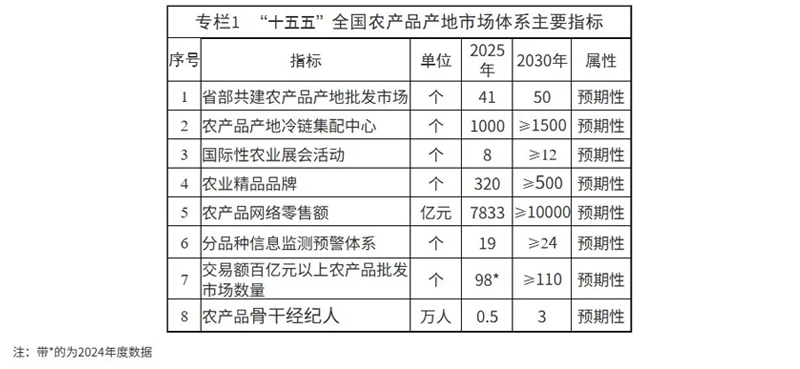
In traditional circulation models, the role of the cold chain has been relatively singular. Its core value lies in minimizing losses. From the moment agricultural products are harvested, deterioration is inevitable. The later temperature control is applied, the greater the losses; the more unstable the storage conditions, the faster the decline in quality. As a result, the industry has continuously invested in pre-cooling, cold storage, and temperature-controlled transportation, with a clear objective—to reduce losses as much as possible.
At this stage, “loss rate” became the key metric for evaluating the value of the cold chain. However, as circulation distances expand, distribution channels evolve, and consumer expectations for quality continue to rise, relying solely on loss reduction is no longer sufficient to support the stable operation of the entire supply chain.
The market is now increasingly concerned with a different set of questions: Is supply consistent? Is quality uniform? Can the timing of market entry be controlled? Even for the same batch of high-quality produce, if it enters the market all at once, prices are often driven down rapidly. In contrast, if the sales cycle can be extended and products are released in batches, it becomes easier to maintain stable pricing and even achieve higher premiums.
The difference here is no longer just about “how much loss is reduced,” but whether there is the capability to regulate supply rhythm. This is precisely why the current round of policy planning emphasizes not only loss reduction, but also the development of a more integrated origin-based circulation system—covering pre-cooling, sorting, storage, and distribution.
The cold chain is gradually shifting from simply “supporting circulation” to actively “influencing pricing.”
If “1,500 distribution centers” is interpreted simply as an increase in the number of cold storage facilities, it significantly underestimates the significance of this initiative.
From a policy perspective, these centers are better understood as node-based infrastructure at the production origin. They are not limited to cold storage functions, but also integrate capabilities such as aggregation, pre-cooling, sorting and grading, primary processing, and distribution.
In this sense, they serve as critical hubs connecting production areas with end markets, playing a central role in the restructuring of the agricultural supply chain.
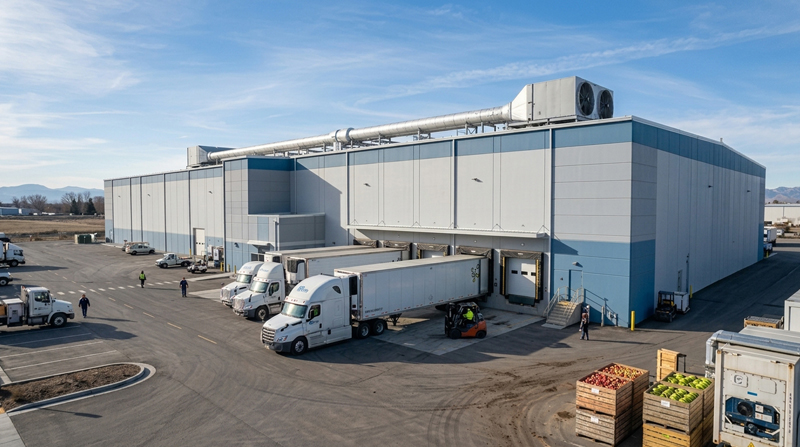
At the same time, cold chain capabilities are continuing to move upstream. Facilities such as field pre-cooling systems, small-scale cold storage units, and mobile cold rooms are being deployed closer to the point of harvest. This allows agricultural products to enter a controlled environment immediately after being picked.
Temperature, humidity, and even atmospheric conditions are no longer passive variables during transportation, but parameters that can be proactively managed from the very beginning.
Once products enter a “controlled state” at the source, subsequent storage duration, release timing, and even market performance are no longer entirely subject to external fluctuations.
This shift is precisely why the industry is moving from “loss reduction” toward “price stabilization.”
As the industry shifts its focus from loss reduction to supply rhythm management, the requirements for cold chain systems are undergoing a fundamental transformation.
The first is the ability to manage time. When pre-cooling is completed, when products are placed into storage, and whether there is flexibility to delay market entry—all of these directly influence release timing. Extending storage duration means avoiding peak market supply periods, thereby reducing the impact of price volatility.
The second is the ability to maintain quality stability. Over longer storage cycles, factors such as temperature fluctuations, humidity changes, and airflow distribution all affect the condition of fruits and vegetables. Without stable control of these variables, extending storage time alone cannot guarantee product quality.
The third is the system’s long-term operational capability. The value of a cold storage facility is not realized at the moment it is built, but over years of continuous operation. Whether temperature control remains stable, whether energy consumption is optimized, and whether real-time monitoring and early warning systems are in place—all of these determine the final operational outcome.
In other words, the real dividing line has shifted from “whether cold storage exists” to “whether it possesses true system-level capabilities.”
Against this backdrop, controlled-atmosphere (CA) storage and intelligent control systems are becoming increasingly important. Compared with traditional cold storage, which relies solely on low temperatures to slow down spoilage, CA technology precisely regulates oxygen, carbon dioxide, and humidity levels, placing fruits and vegetables into a low-respiration state and significantly extending their shelf life.
At the same time, intelligent control systems enable real-time monitoring and dynamic adjustment of operating conditions, making the entire storage process more stable and controllable.
This transformation is particularly evident in the kiwifruit-producing region of Zhouzhi in Shaanxi Province. As one of China’s key production areas, kiwifruit harvested in Zhouzhi is typically placed into storage and circulation in large volumes during the harvest season. In subsequent distribution processes, the flexibility of storage conditions and release timing has gradually become a key factor influencing overall circulation efficiency.
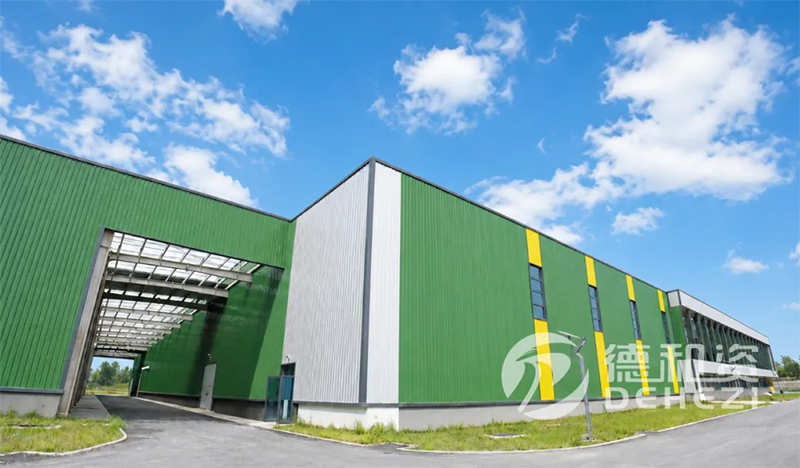
In the Zhouzhi Kiwifruit Industry Integration Demonstration Park Project, a structural transformation is taking place at this stage. The project, in which Dehezi participated in overall planning and construction, is centered on local cold chain requirements and has established an integrated storage system combining both cold storage preservation and controlled-atmosphere (CA) storage, enabling more complete capabilities in graded storage and operational scheduling at the origin.
Within a multi-temperature operating environment ranging from -2°C to 10°C, the system achieves precise temperature control within ±0.5°C. Combined with gas environment regulation and intelligent monitoring systems, it continuously optimizes oxygen, carbon dioxide, and humidity levels inside the storage space, allowing kiwifruit to maintain a more stable respiratory state and moisture balance throughout the storage period.
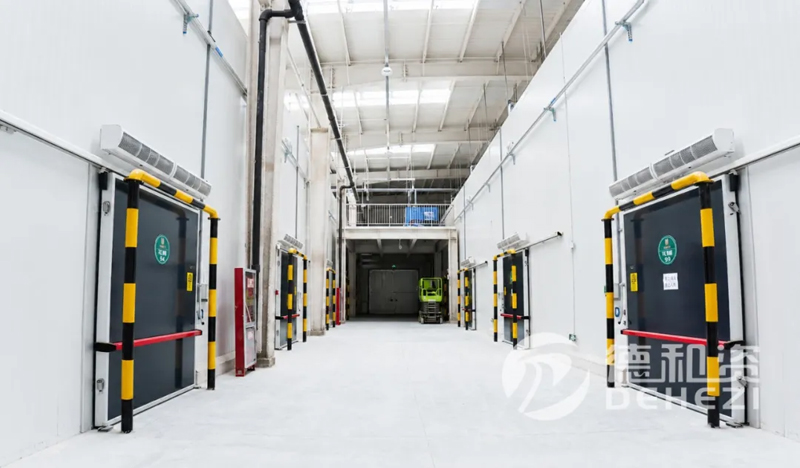
This capability brings about a change that goes beyond simply extending storage duration. It enables products to maintain relatively stable quality over longer cycles, while also providing greater flexibility in market response.
When storage duration and quality stability can be managed simultaneously, the role of cold storage also changes accordingly. It is no longer merely a “storage space,” but becomes a key node participating in the regulation of supply and demand dynamics.
For production areas, this shift means moving away from relying solely on concentrated shipment schedules toward having stronger rhythm-adjusting capabilities. This is precisely the real manifestation of the cold chain’s evolution from “loss reduction” to “price stabilization.”


